
In this series
This article is part of a three-part exploration of children’s mental health through the lens of adaptation and recovery. Each article can be read independently, but together they build a broader picture of how growing brains and bodies respond to the demands of everyday life.
- Part 1: Why the body matters in children’s mental health
- Part 2: Has modern childhood become too demanding? (this article)
- Part 3: Rethinking resilience: the overlooked role of recovery
Introduction
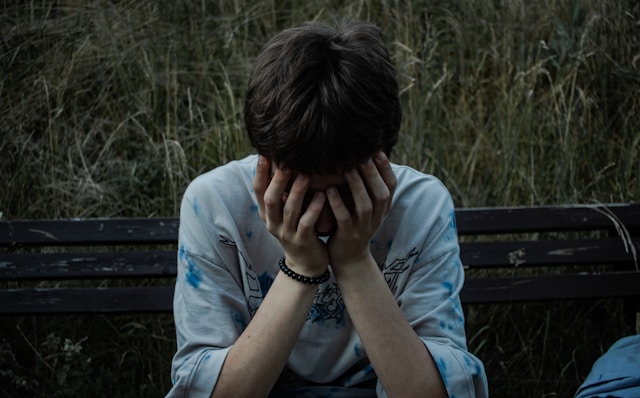
Over the past two decades, increasing numbers of children have struggled with anxiety, emotional distress, school attendance difficulties, persistent exhaustion and poor mental wellbeing. Schools report rising levels of additional need. Families describe children who once seemed to cope but who gradually become overwhelmed. Mental health services face unprecedented demand.
Many explanations have been proposed. Some blame smartphones and social media. Others point to increased academic pressure, reduced physical activity, poor sleep, the pandemic or changes in parenting. Each of these factors probably contributes in some way.
The difficulty is that none of these explanations, on its own, appears to fully account for what we are seeing.
The important question may not be which factor is responsible.
Perhaps it is what they all have in common.
We often describe modern childhood as increasingly stressful. Yet stress is only one example of something much broader. Every day, children are asked to adapt – not only to stressful experiences, but also to learning new skills, making friends, moving between classrooms, filtering sensory information, coping with uncertainty and switching between activities.
Not everything that requires adaptation feels stressful. But everything that feels stressful asks the brain and body to adapt.
Perhaps understanding why increasing numbers of children are struggling begins not with stress itself, but with understanding the hidden work of adaptation.
Every challenge requires adaptation
From the moment we wake up, our brains and bodies are continually adapting to the world around us. We adjust to changes in light, temperature and sound. We shift our attention between different tasks, learn new information, solve problems, cope with uncertainty, navigate social situations and regulate our emotions. Even standing up, walking across a room or holding a conversation requires countless adjustments beneath conscious awareness.
This continuous adaptation is one of the greatest strengths of the human nervous system. It allows us to learn, grow and respond flexibly to changing circumstances.
But adaptation is not free.
Every act of adaptation requires biological work. The brain and body continually regulate internal systems, coordinate physiological responses and process new information in order to maintain stability while responding to changing demands.
Most of the time, we are completely unaware that this extraordinary process is taking place. It happens quietly and continuously in the background, allowing us to adapt to everyday life without giving it a second thought.
Adaptation depends on recovery
If adaptation is one half of the story, recovery is the other.
We often think of recovery as something that happens after the important work is finished. In reality, recovery is an essential part of the work – it is one of the biological processes that make continued adaptation possible.
We see this from the very beginning of life. Babies spend much of their early life asleep. During sleep, the body restores itself while the brain continues to consolidate memories, integrate new experiences and support rapid development. Recovery provides conditions that support learning and development.
This principle extends far beyond infancy. Throughout life, healthy adaptation depends on cycles of challenge followed by recovery. Without sufficient recovery, the brain and body have less opportunity to restore the capacity needed for future adaptation or to integrate what has already been learned. Over time, adapting to everyday demands may therefore become progressively more difficult.
Has childhood changed?
This raises an important question. Have the demands placed on children begun to outstrip their opportunities for recovery?
Many now experience more structured days, greater academic demands, higher expectations for behaviour and self-regulation, more organised activities and increasingly complex social environments – all of which ask growing brains and bodies to adapt in different ways. Digital technology has also changed the rhythm of childhood, allowing friendships, conflicts and social comparison to continue long after the school day ends.
At the same time, opportunities for recovery may have become less common. Recovery is not defined by what a child is doing. It is defined by whether the demands placed on the brain and body have been reduced sufficiently for restoration to occur.
In many communities, children have fewer opportunities for self-directed activities such as unstructured play and independent exploration, while downtime is increasingly filled with organised activities or digital engagement. Even periods that appear restful may still demand attention, decision-making or social interaction.
None of these changes is necessarily harmful on its own. The issue may be cumulative. Every additional demand – academic, sensory, social, emotional or digital – has the potential to increase the adaptive work required of the brain and body. Individually, these demands may be manageable. Together, they may create a childhood that asks children to adapt more often, to increasingly complex demands, and with fewer opportunities to recover.
When adaptation becomes harder
Children differ in how much adaptive work is required to meet the same demands. Some appear to thrive in busy, fast-moving environments. Others have to put in considerably more effort to adapt to the same situations.
Sensory differences, neurodevelopmental conditions, chronic illness, previous adversity, sleep difficulties or simply individual differences in temperament can all influence how much adaptive work everyday life requires.
While the outward demands may look similar for two children, the internal adaptive workload may be entirely different. They may sit in the same classroom, complete the same lesson and appear equally engaged, but the adaptive work required from each to achieve the same result may be very different.
When demands continue to exceed opportunities for recovery, the consequences may emerge gradually rather than suddenly. Children may become increasingly tired. Concentration may become more difficult. Emotional regulation may require greater effort. Everyday tasks that once seemed manageable can begin to feel overwhelming.
For some children, school attendance becomes increasingly difficult. Others develop anxiety, low mood or persistent physical symptoms. Some withdraw socially. Others appear irritable or lose interest in activities they once enjoyed.
These experiences are not identical, and they have many different causes. But they may all share one important feature: they may reflect situations in which adaptation has become increasingly difficult to sustain.
A different question
This perspective changes how we think about children’s mental health.
Instead of stating that children need to become more resilient, we might first ask whether we have created environments that ask children to adapt in healthy and sustainable ways.
Instead of asking why a child has stopped coping, we might wonder how much work their brain and body have been doing to keep adapting to the demands of everyday life.
Instead of asking how quickly we can return children to previous levels of performance, we might ask whether they have had sufficient opportunity to recover.
These questions do not replace psychological, social or medical explanations. They simply recognise that every thought, emotion and behaviour emerges from a living brain and body that must continually adapt to the world around it.
Looking ahead
If this perspective is correct, improving children’s mental health will require more than teaching coping strategies or encouraging perseverance. It will also require us to think carefully about the balance between challenge and recovery.
Children need opportunities to learn, stretch themselves and face manageable difficulties. Challenge is an essential part of healthy development.
But challenge without recovery is unlikely to build lasting capacity.
Perhaps the question is no longer why increasing numbers of children are struggling. Perhaps it is whether modern childhood still provides the conditions that allow growing brains and bodies to recover so that learning, adaptation and healthy development can continue.
End of Part 2
If healthy adaptation depends on recovery, have we misunderstood what resilience really is?
Explore this question in Part 3: Rethinking resilience: the overlooked role of recovery
First published:
Last updated:
 Unmasking Autistic Burnout
Leave a comment